
Bad Tourists
On spending less and demanding more

Much has been said about the Indian tourist lately. We’re too loud, too crass, too fond of dancing in public places and we don’t spend. I disagree on 3 of 4 counts. I don’t think it’s right to paint such a diverse group of people with a single brush. Crassness and boorishness are universal - I’ve seen awful Indian travellers, the same way I’ve seen awful Brit, American and Aussie travellers.
But it is true that we don’t spend. We’re value seekers. Aggressive value seekers. And so elite is our aggression, that it makes me wince every time nationalists outrage at anti-Indian tourist policies - especially at their claims of sending that nation’s tourism industry out of business.


We’re not as big as we think we are
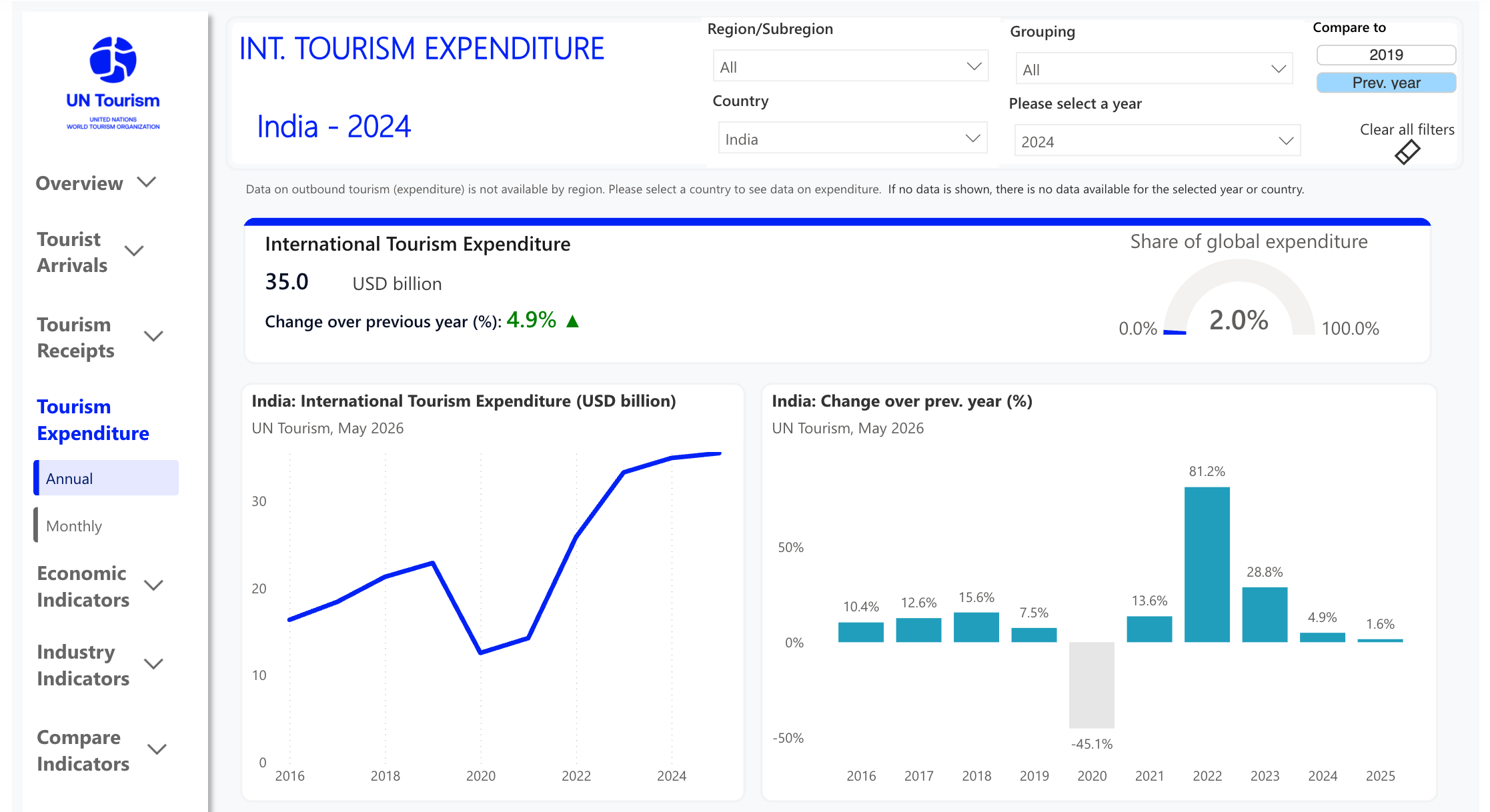
Consider this: According to the UN World Tourism Organization, India’s total outbound tourism spend, ie, the money that Indians spent on travels abroad, totalled to $35 billion for the year 2024. This sounds very impressive, until you learn that the Chinese spent $252 billion, the Americans, $178.9 billion, Germans,$124.9 billion and the Brits, $103.2 billion. Our total share of global tourism expenditure is at a lowly 2%.
There were 30.89 million outbound travellers from India in 2024. China sent 146 million tourists the same year. If you were to do some simple math, the amount spent per traveller works out to ~$1,133 per trip for Indians and ~$1,717 per trip for the Chinese. The difference was starker in 2023, where the Chinese spent nearly double - ~$2,260 versus Indians’ ~$1,180.
There are structural reasons for this, of course.
Every dollar an Indian tourist spends abroad is now an eye-watering ₹95, on average. A Chinese tourist spending the same dollar parts with only 7 yuan. Our currency is crippled.
But there’s also money psychology at play. For most Indians, status isn’t in the end product, that is in acquiring the goods or experiencing the service. It’s in how much one is able to extract from the transaction itself.
We also come from a culture where leisure is looked down upon as a waste of time, so the very idea of indulgence for the sake of it, monetary or otherwise, is inherently hard for us to justify. And so we pride ourselves on what we’ve managed to squeeze out of the trip. The breakfast buffet charge that was skipped because you were smart enough to bring food from home. Fitting five people in a room that is comfortable only for two. The bigger the squeeze, the greater the satisfaction.
And yet, heart of hearts, we believe that we can bring economies to their knees. In 2024, we got the chance, too.
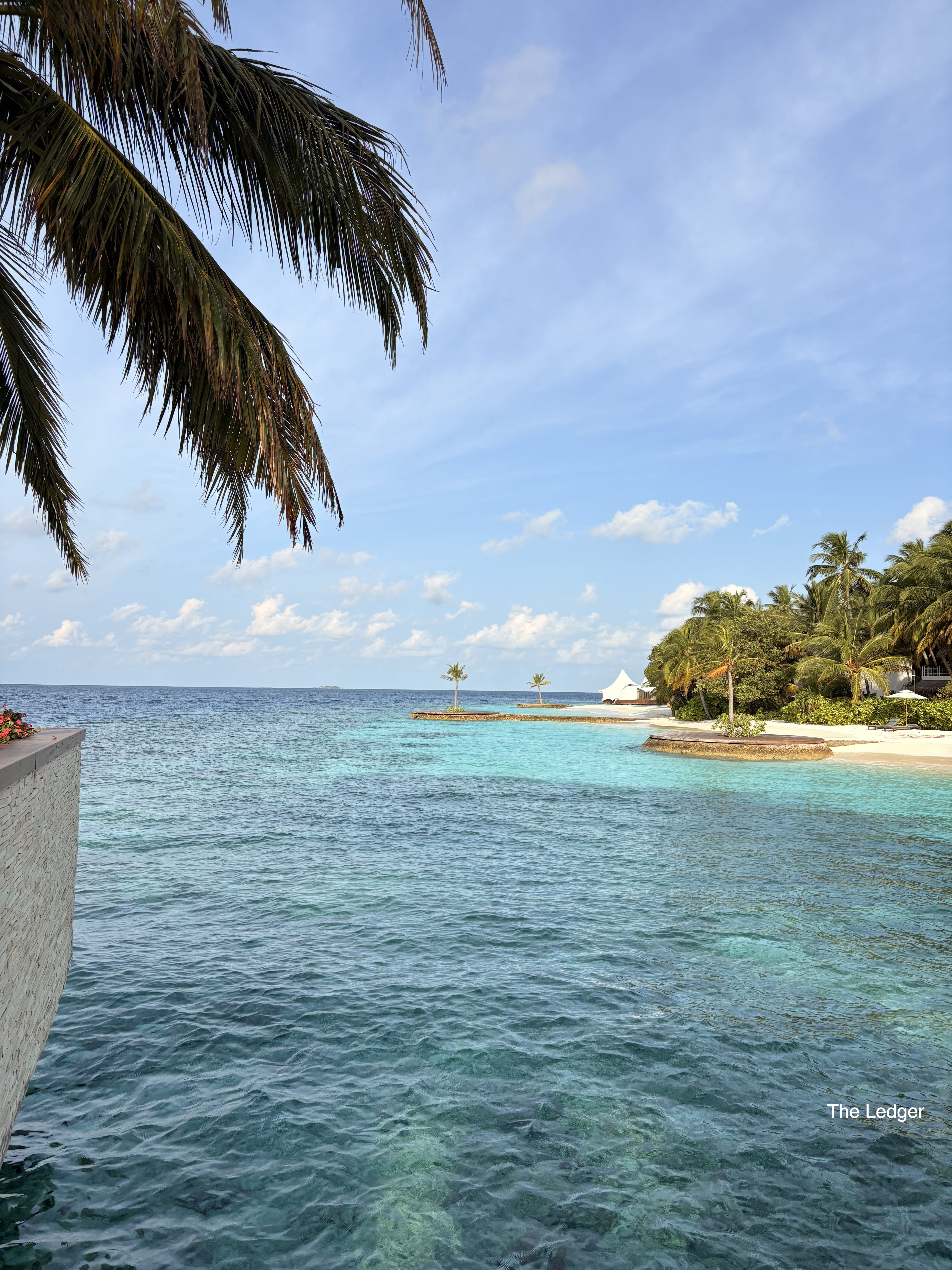
2024 was the year Indian tourists took it upon themselves to #BoycottMaldives following a Maldivian minister’s off-the-cuff remarks about the Indian Prime Minister and his appreciation of Lakshadweep. Ticket booking websites proudly announced that they would no longer have the destination available, as a mark of solidarity. And while the number of Indian tourists to the Maldives fell, from 209,000 in 2023 to 130,805 in 2024 (a drop of nearly 38%), the tourism industry there didn't so much as trip. China stepped in with 263,340 arrivals, and the Maldives welcomed over 2 million tourists in 2024, surpassing the previous year's 1.88 million and setting a new record.
I want you to think about where the Maldives is for a minute.
It’s below Sri Lanka, and requires a great deal of screen-pinching to locate on maps. Rest assured it’s omitted from school maps and globes because of its size. As a country, it’s 90,000 km2 of oceans and lagoons, and 298 km2 of land (all islands put together).
For reference, the Greater Chennai Corporation limits define the city to be 426 km2 of land.
India has 11,000 times the landmass of the Maldives. But we don’t receive even 5 times the tourists.
We have the Taj Mahal, the temples of the Cholas, the magnificent ruins of Hampi, the deserts and palaces of Rajasthan, the backwaters of Kerala, the beaches of Goa, the tea estates of Darjeeling, the coffee estates of Coorg, the vineyards of Nashik, and well, I could go on. India should be overrun by tourists, but the truth is that we sent more people out of the country - 30.89 million - than we welcomed in, at 9.95 million.
If we’re mostly great tourists - respectful of local customs, curious about cultures, understanding of space, and just all round good guests - wouldn’t we have been able to attract more people to come visit us? India as an incredible destination needs no advertisement given the length and breadth of our diaspora and the all-pervasiveness of Bollywood.
And yet.
Being good to ourselves
In my mind, Indians don’t need civic sense training before they travel abroad as much as they need it in their everyday lives. Generations of Indians have treated their own public spaces - buses, trains, parks, monuments, and heritage sites - with a very specific kind of entitlement - phone numbers on 16th century stone, litter at hill stations, dumping garbage in rivers, et cetera et cetera. It doesn’t help that our bureaucracy’s idea of ‘beautifying’ (something that has been uniform across political parties and across generations) does more visual harm than good.
Our collective lack of respect towards our spaces - and to ourselves - has never attracted meaningful consequence. It has simply been accepted as our way of life. No one is fined, no one is shamed, no one is turned away for breaking the rules. And so, no one follows them. Have you ever boarded a domestic flight in India? No one queues. It’s simply a mass of people that floats toward boarding.
And now that we’re travelling abroad - we are seeing consequences. Public shaming, traffic fines, visa restrictions, hostile service, unwelcome signage, countries willingly saying goodbye to both Indian tourists, and immigrants.
What’s tragic to me is that a lot of this could’ve been avoided if only we’d been taught, nay, shown, consequences.
I read the news of Thailand’s updated visa restrictions for Indians when I’m in Hong Kong.
I’ve an extra day there thanks to a booking complication. My husband and child had left in the morning, and my flight was only the next day. I decide to walk around the area with no agenda other than people watching. I am traipsing down Nathan road, looking into window displays. I stop at Cartier to admire the selection they’ve put out, when I see a couple walk out of the store with multiple red bags in each hand. They’re unmistakeably ‘mainlanders’ - tourists from China. They don’t look particularly wealthy, but it’s evident that they’ve already spent my post-tax annual income (which, not to be immodest, is significant) at the store.
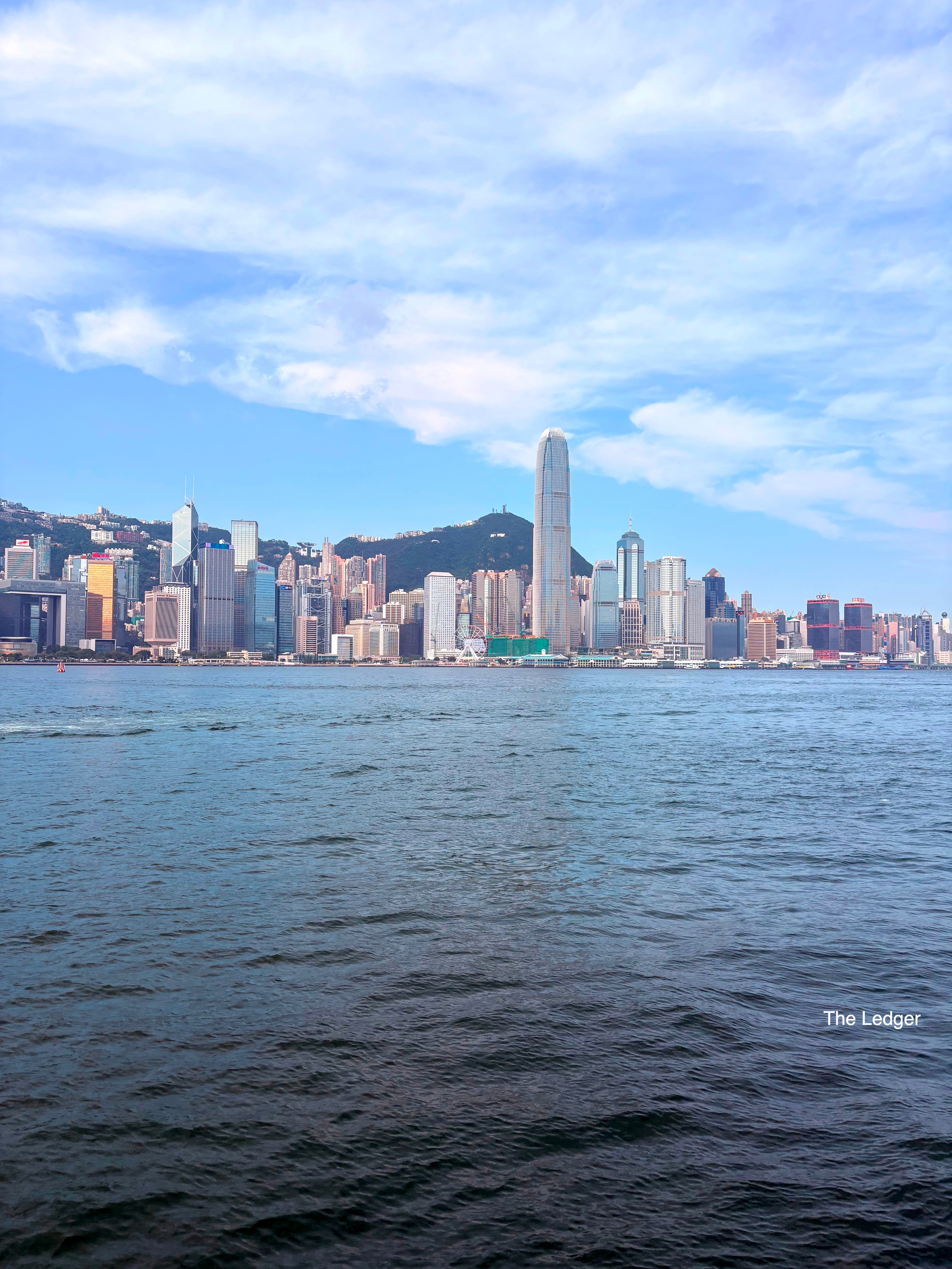
This is my third time at Hong Kong, and I’ve learned enough about the city to know that there is some kind of friction between the natives and the mainlanders. Town mouse, country mouse. But what the mainlanders may lack in sophistication, they more than make up in their ability to casually drop thousands of dollars on things. And so, sophisticated Hong Kong businesses pull as many stops as they can to lure mainland dollars.
Once again: Crassness and boorishness are universal - I’ve seen awful Indian travellers, the same way I’ve seen awful Brit, American and Aussie travellers.
But as I watched the couple hoist their Cartier bags like they’re full of groceries and disappear into the Hong Kong sun, I understood what I’ve not been able to articulate before.
Indians are not being singled out because we’re uniquely awful.
We’re being singled out because we don’t spend enough for our awfulness to be tolerated. And perhaps the easier thing to do, until our wallets are capable of doing the talking, is to stay quiet.
Beautiful beautiful and just spot on... I was born , brought up in Bangalore (for 30 years) and now in living in the UK, ~7 years to date. (spent good enough time in India to understand our folks and now 'grown up enough' to understand the 'rest' !!) As I travel in this part of the world, my observation is ..its ok we spend less... I have seen lot of locals who are frugal, 'budgeted' kinda travel, I don't think no one looks down on us for that.. (as long as we don't secretly squeeze 6 people in 4 -bed bedroom, these guys just haaaate that !!) .. the worst bit of us Indians, well most Indians not every Indian, is, complete lack of civic sense, and annoying public behaviour.. it really hurts me and I feel so ashamed, saaad, when I see such Indians here..
Once I was in Scotland, on a Tourist Bus, there were other tourists from different countries, there was one Indian family apart from myself; this Indian guy had 'video called' and is talking so so loudly ... all this when the Bus-tour guide was explaining on the mic as we passed different sights.. everyone was so annoyed with this phone guy and the whole atmosphere was ruined (he was told off in different ways)!
Why 'manners' are not taught in most homes, schools is my general worry !!Even worrisome is most Indians travel abroad as 'grown ups'....the least they can do is look around, observe and follow the same .. but no..
The solution probably lies with the booking agencies/ tourism companies !... They must and should give a mandatory 'behaviour session' to all tourists they are sending ...and have an exam to pass, only people who pass should be issued tickets!! the government, school, Families, elders, all have failed to teach good manners , public behaviour and civic sense to our folks.
I really hope more and more Indians realise this - when we (Indians) go as tourists or live abroad, we all should remember that we are 'ambassadors' of our countries in our own small ways.... Opinions are immediately formed about the entire nation based on how we portray ourself to the world .
Thank you for bringing this topic and it is such an awesome read !
Once at Galleries Lafayette Paris' Pierre Herme counter i was calculating the cost of macarons and proudly got 12 packed. Chinese guy came right after me and took two boxes of 50+ pieces for his young daughter.